The PQS-402
Omnidirectional Loudspeaker
Reference Series
Award Winning Loudspeakers
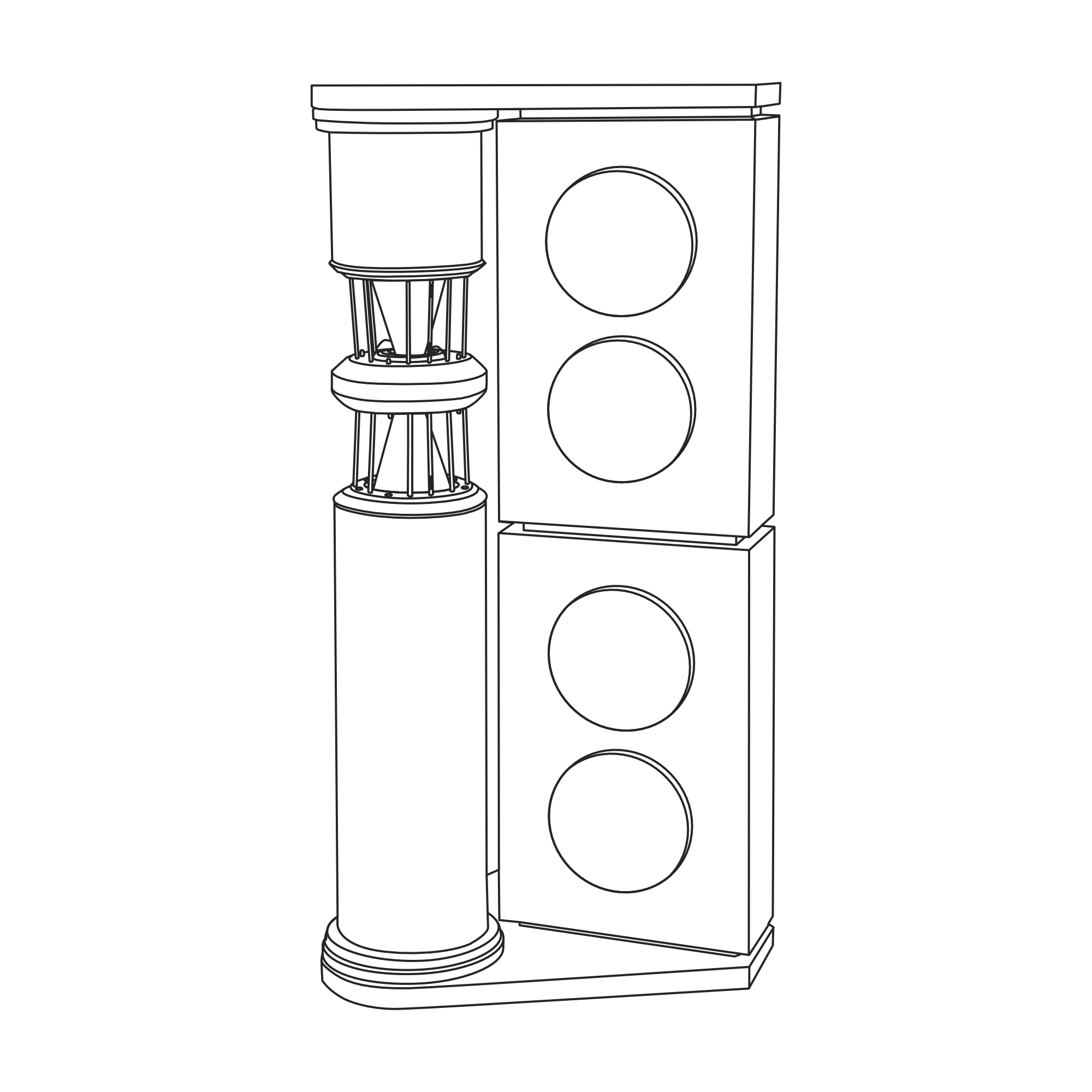
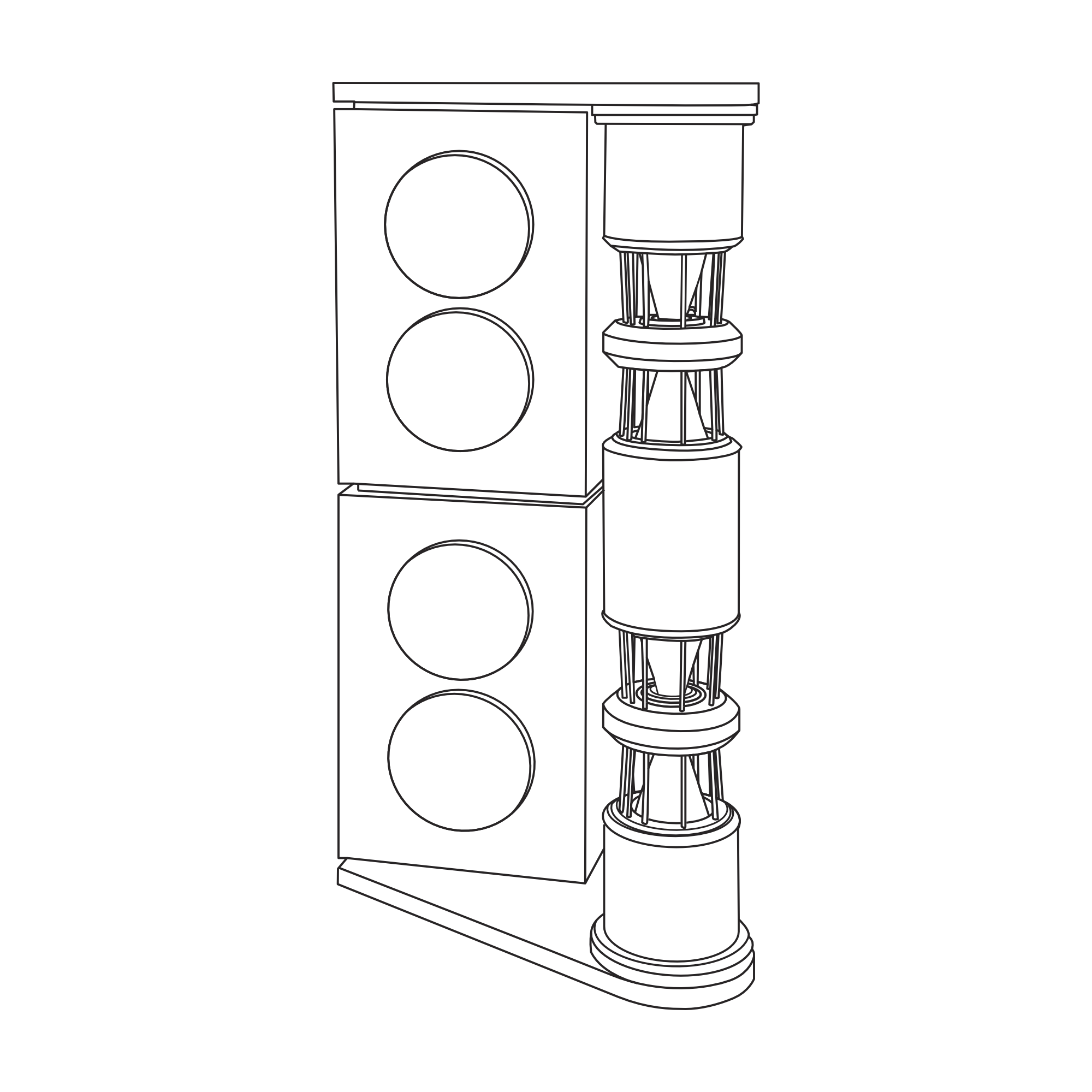
The design brief for the PQS-402 was to produce a listening experience comparable to that of our Loreley Mk III model from a loudspeaker with a smaller cabinet, thereby making the performance provided by our reference level products available to a wider audience. As well as the usual impressive German Physiks immersive stereo imaging, the PQS-402 also boasts a very wide dynamic range that comes close to its larger stable mate.
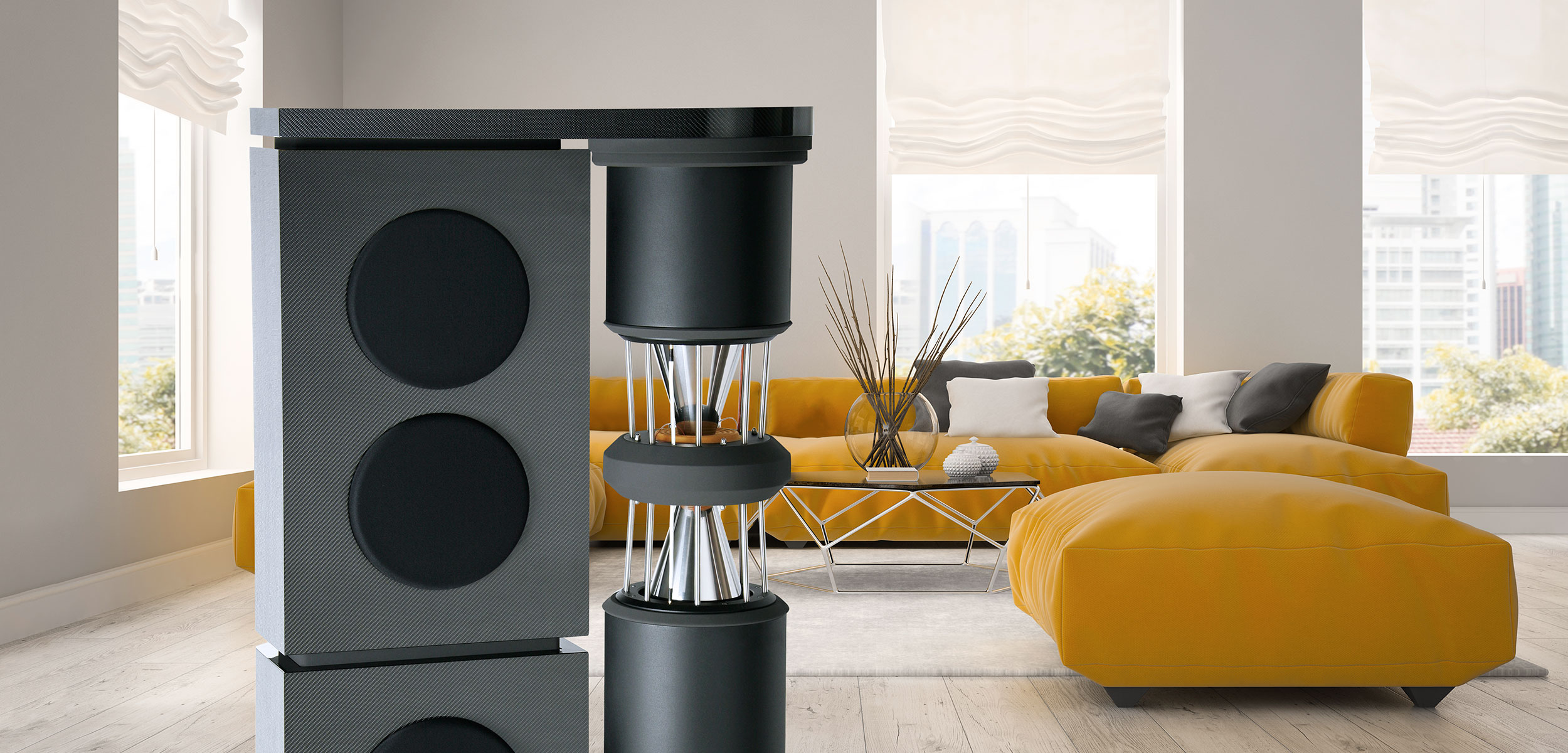
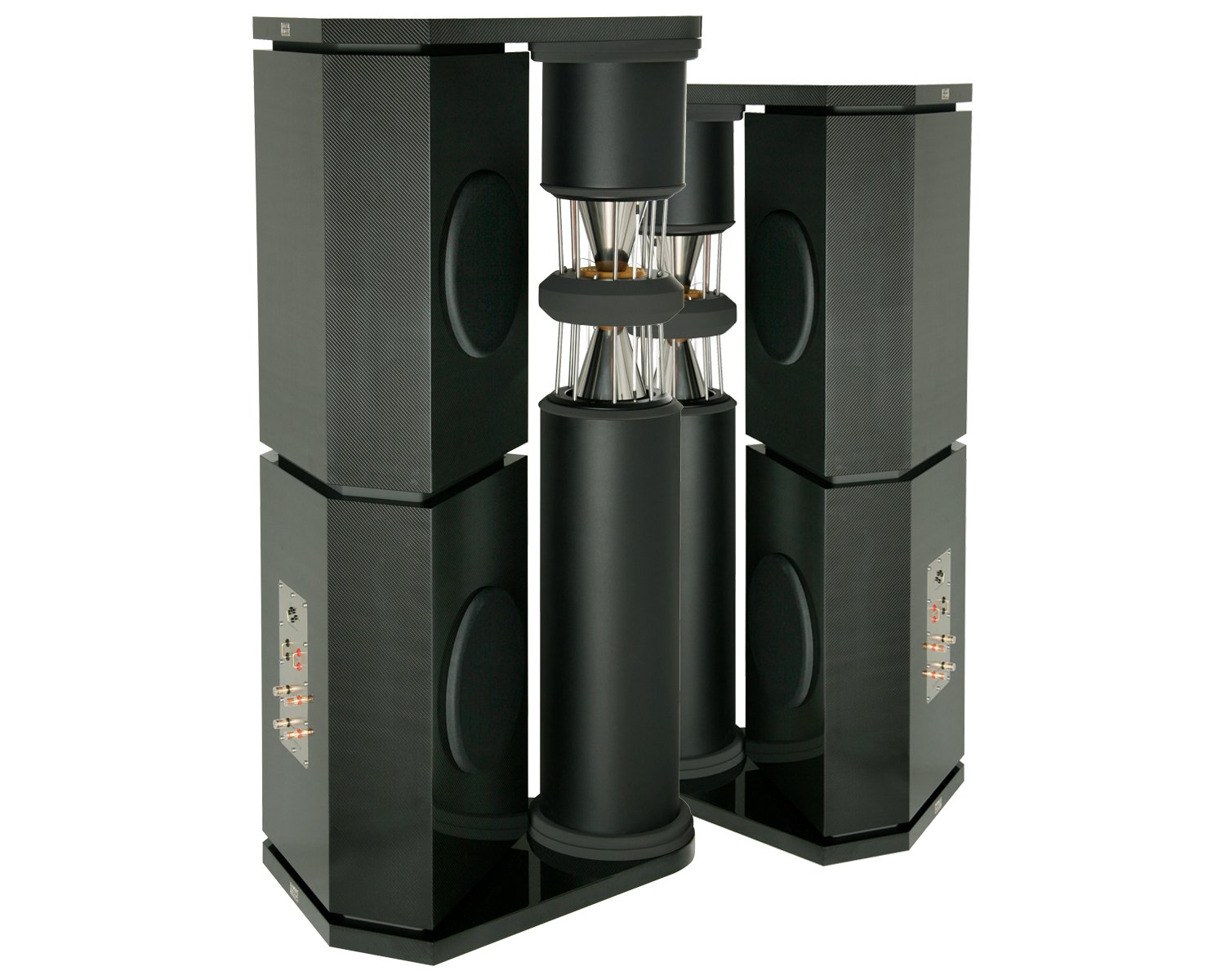
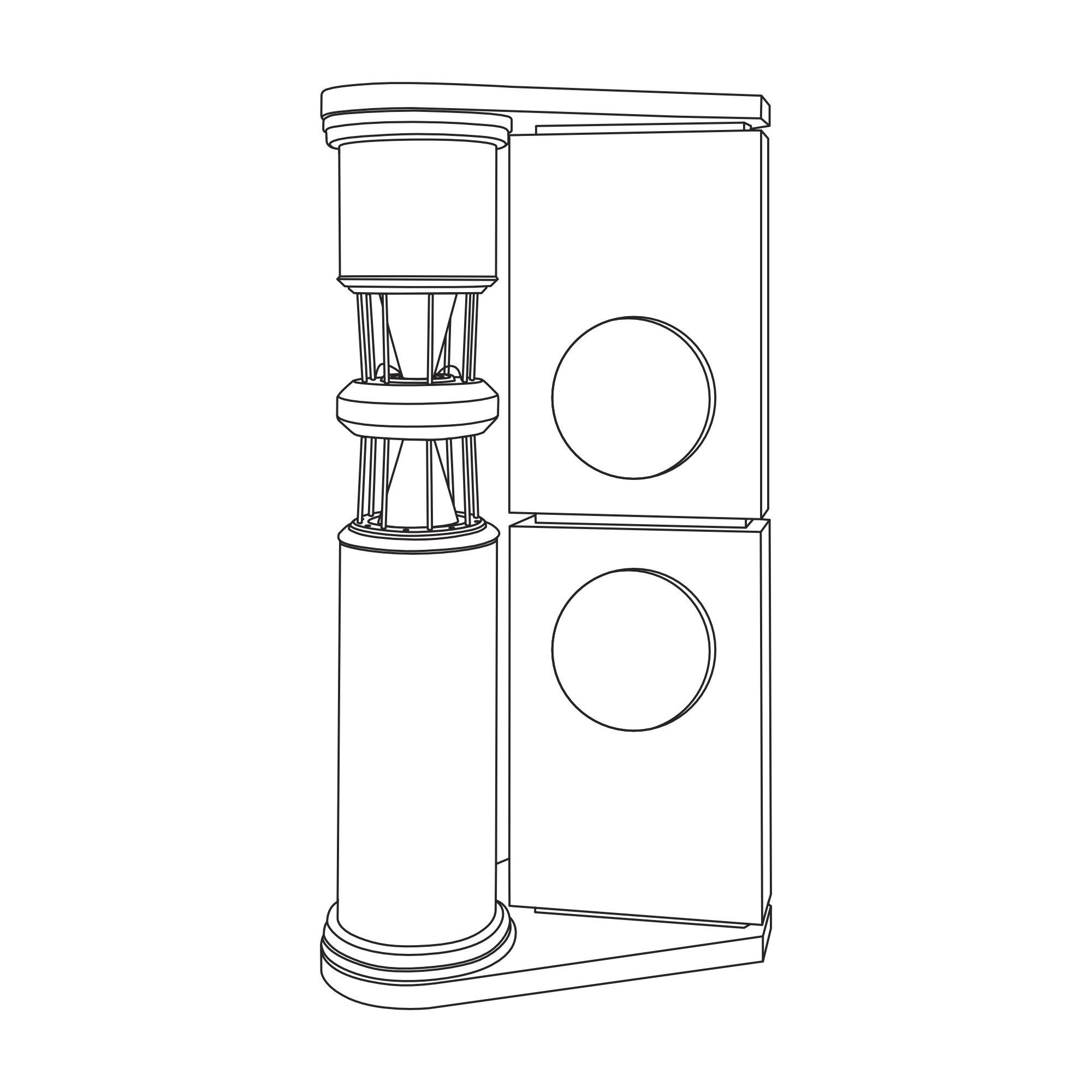
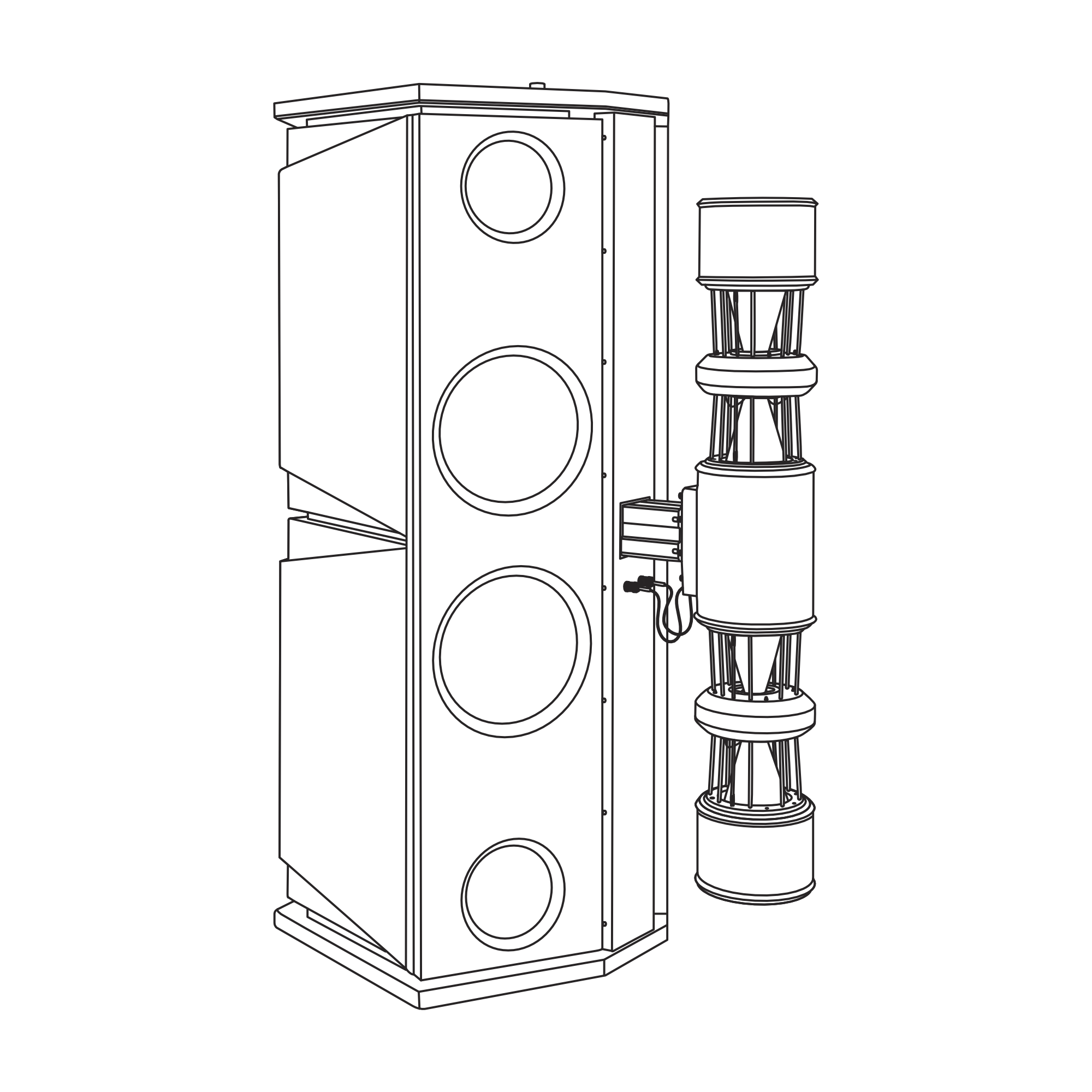
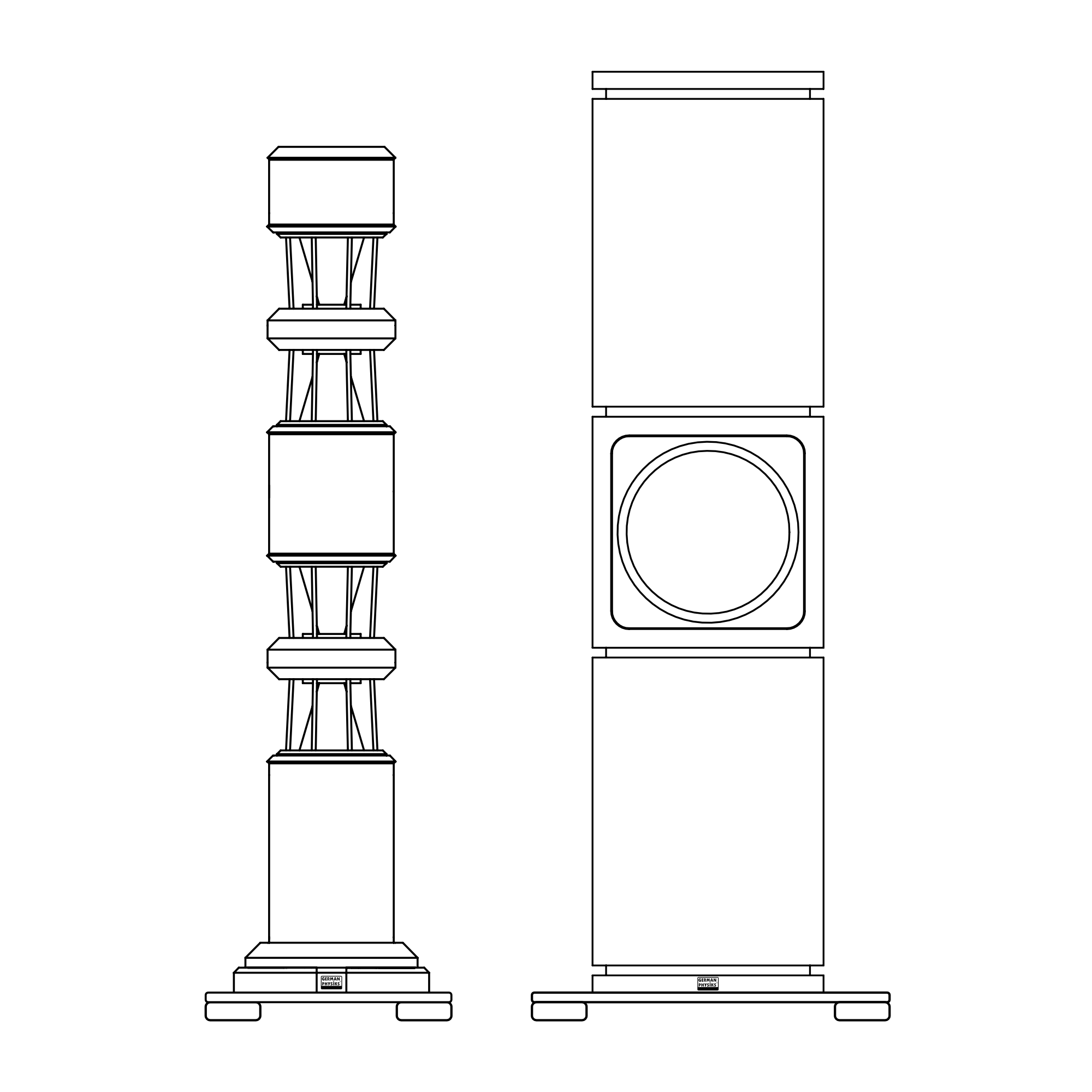
The PQS-402 uses two DDD drivers, two 10-inch woofers and four 8-inch passive radiators to provide exceptional dynamics and resolution that will take you a step closer to a real performance.
The bass system produces prodigious amounts of deep and well-controlled bass, which at the same time has the speed and finesse to perfectly match with the twin DDD drivers. The combined effect is a loudspeaker that can do equal justice to full-scale orchestral works, or a solo voice. This is further enhanced by the PQS-402’s very high maximum output level (118dB), which allows a closer approach to live music dynamics, without compression.
The problem
Because we wanted to cross over the DDD driver to the bass system between 220Hz and 140Hz, we had to find a way to build a very fast bass system that could match the speed of the DDD driver in the crossover region and also work down to 25Hz. To reproduce low bass at high levels a lot of air has be moved. This requires either a driver with a large surface area, which will be heavy and therefore not easy to move at the speed necessary to match the DDD driver, or a driver with a long excursion, which again will be heavy due to the rigidity required to withstand the necessary acceleration. Most loudspeaker designers solve this problem by producing a 3-way system. However, in a loudspeaker the size of the PQS-402, a 3-way solution would have been worse than a 2-way solution, due to the difficulty of making 3 drivers appear to be a single source. This is especially difficult with the mid and treble drivers, where the ear’s ability to locate position is very acute. It can be done, by why bother when you have a better solution?
The solution
Our solution was to build a bass cabinet using a fast and powerful 10-inch driver and two 8-inch passive radiators. The 10-inch driver integrates flawlessly with the speed of the DDD drivers and the passive radiators extend the bass response smoothly down to 25Hz as required. The bass system comprises two cabinets that are mounted one on top of the other and stand between a top and a bottom plate. None of these components is attached to the other using screws or any other form of hard connection. Instead, they are held together by a system of interlocking collars. This, combined with the fact that the two cabinets have different weights, as do the top and bottom plates, means that resonances are reduced to negligible levels compared to a solid structure.
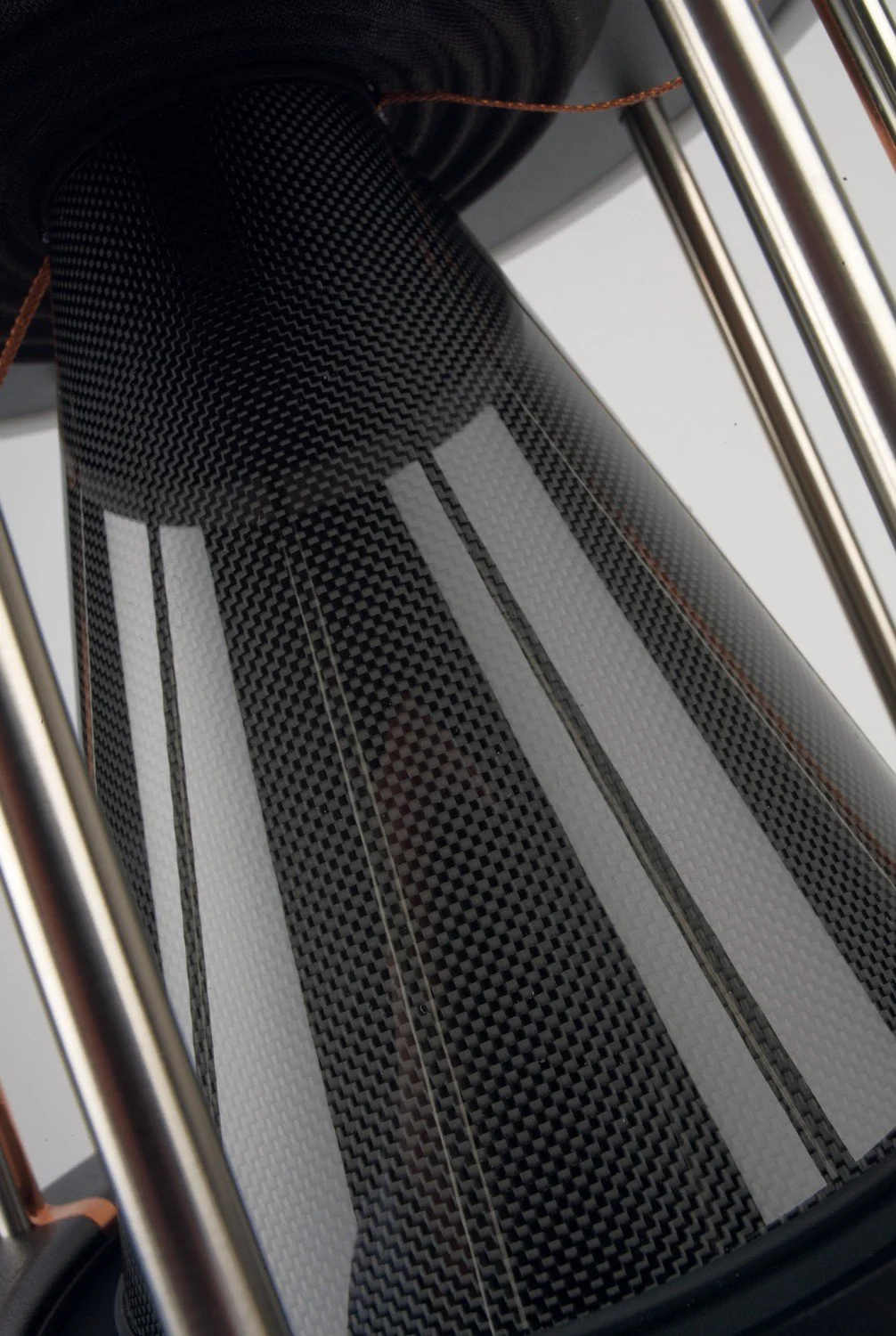
The revolutionary DDD driver
The heart of all German Physiks loudspeakers is our revolutionary DDD driver. This is an omnidirectional driver with an exceptionally wide frequency range. Despite its simple appearance, it is in reality an extremely sophisticated design.
It provides 8 important advantages to all German Physiks loudspeakers and this combination is what sets them apart from other loudspeakers.
A realistic stereo image more like you experience in the concert hall.
A stereo image that is enjoyable in almost all positions in your room.
An exceptionally coherent sound.
Accurate portrayal of musical instruments’ tonal characteristics.
An exceptional transient response.
Being omnidirectional they are comparatively quick and easy to set up.
The DDD driver’s low moving mass reduces cabinet resonances.
The carbon fibre DDD driver is physically extremely rugged.
The Emperor Extreme Crossover active option provides a significant performance upgrade
Active option
The PQS-402 may be ordered in an active version, where the internal passive crossover is omitted and the woofer and DDD driver sections of the loudspeaker are driven directly by two separate power amplifiers. This allows much better damping and control of the drivers and provides a noticeable improvement in transparency.
The active version of the PQS-402 is supplied with our Emperor Extreme DSP based digital crossover. This is a high-quality unit constructed using premium components and is housed in a heavy steel and aluminium chassis.
This is pre-configured at the factory, so all the customer has to do is connect it into the system and switch it on. The output levels of the crossover’s two sections can be adjusted via a front panel control. This allows a degree of compensation for room response errors.
The adjacent table shows the recommended amplifier rating for each section of the loudspeaker.
| Section | Minimum Power |
|---|---|
| DDD drivers | 140W/4 ohms |
| Woofers | 140W/4 ohms |
Low resonance cabinet design enhances transparency
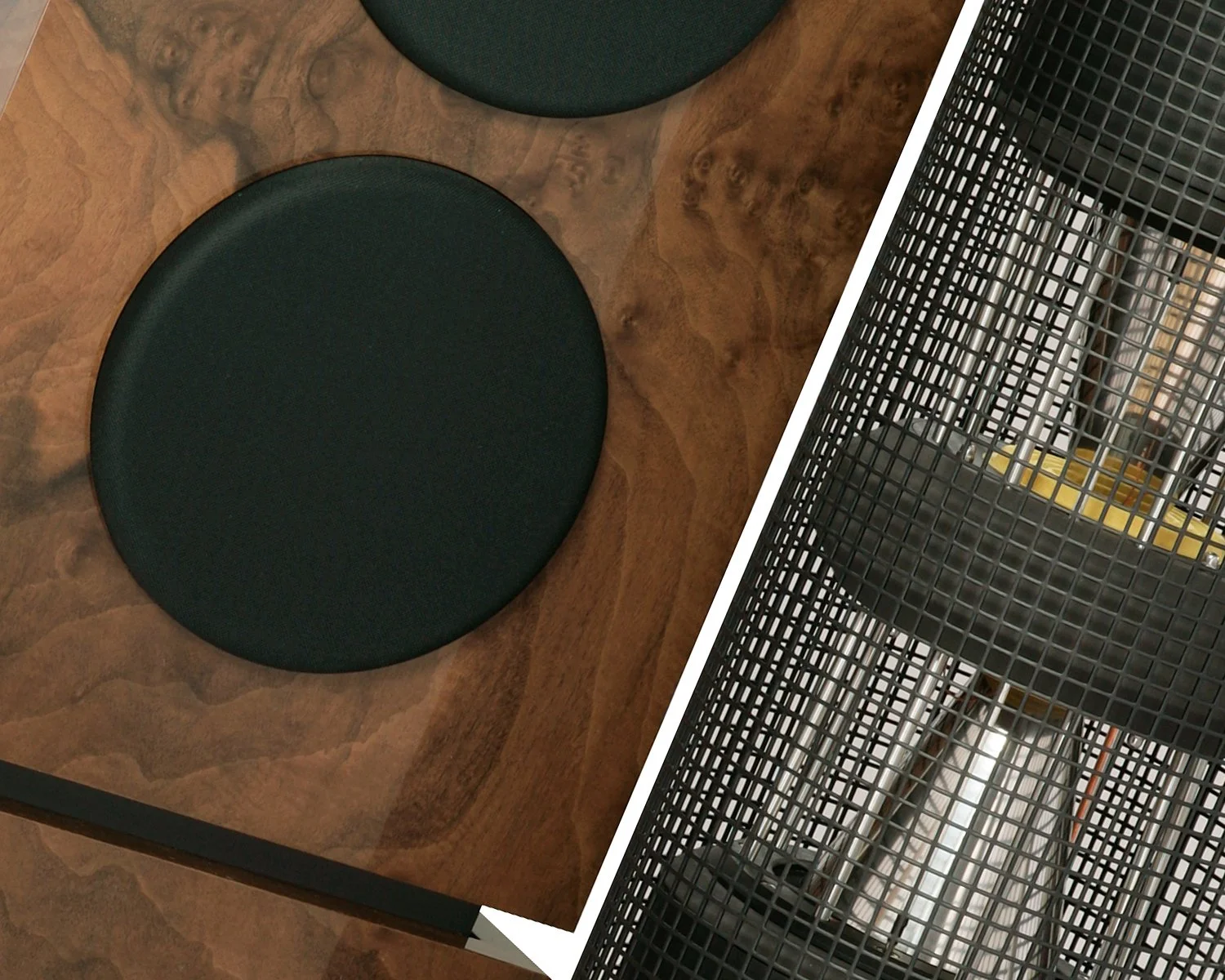
Colouration caused by resonances in a loudspeaker cabinet, where the cabinet itself starts to radiate sound energy, can seriously degrade the sound quality by obscuring detail. Because of the very high sound level capability of the PQS-402 (118dB), we went to great pains to design a cabinet where resonances were minimized, as these would otherwise degrade the loudspeaker’s ability to resolve the fine detail that is essential in order to produce a sense of realism and hence convey the emotion that is the essence of a musical performance.
The PQS-402’s DDD drivers use very small enclosures, minimizing the area of any potential vibrating surface. Being cylindrical, they eliminate the resonances that can arise with a conventional rectangular or square section cabinet. Because they are made from aluminium, a comparatively soft metal, residual vibration of the enclosure is minimised. The DDD driver enclosure end-caps are made from non-resonant MDF and the enclosure is packed with damping material to dissipate any standing waves. The result is that the PQS-402 has the clarity that we normally associate with electrostatic loudspeakers and for the same reason: they essentially have no enclosure to colour the sound.
The bass system, which covers the range from 215Hz downwards, is divided into two independent cabinets, so the panels are smaller and therefore stiffer and more vibration-resistant than if a single large enclosure were to be used. All the cabinet vertical surfaces are non-parallel to prevent the formation of standing waves between them. Internal bracing increases rigidity to suppress resonances. Residual vibration is minimized by applying a special damping material called Hawaphon®, to the inside surface of each panel.
Hawaphon® consists of a polymer sheet containing a matrix of small cells filled with fine steel shot. It adds mass to the panels to reduce the resonant frequency and the ability of the balls in each cell to move against each other provides a very effective way of converting vibration energy into heat. Originally developed as an anti-surveillance measure for use in military and government buildings, Hawaphon® achieves broadband attenuation of structure-borne sound of more than 50dB, which is an exceptionally high figure.
To damp resonances of the air within the cabinet, the whole of the interior is lined with a 1cm thick layer of high-density felt. This is achieved by fitting pieces of felt that are precisely cut to fit each panel, rather than just inserting a roll of felt into the cabinet. This is a time consuming process, but we believe produces a superior result and is typical of the attention to detail that we lavish on all of our products.

Designed for a lifetime of listening pleasure
As you would expect from a German product, the quality of construction and reliability are first class. We use the same quality of parts in the PQS-402 as in our luxury products, where we design for a minimum life expectancy of 25 years.
Meticulous care and attention are paid during manufacture. Prior to assembly all components and materials are subject to a rigorous inspection. We also carry out detailed inspections at each stage of the manufacturing process. We can afford to do this as we build our products by hand in small batches. After assembly, the performance of each loudspeaker is measured. It is then burnt-in for at least 12 hours and then measured again. Once the burn-in process is complete, each loudspeaker is given a final detailed physical inspection before being packed.
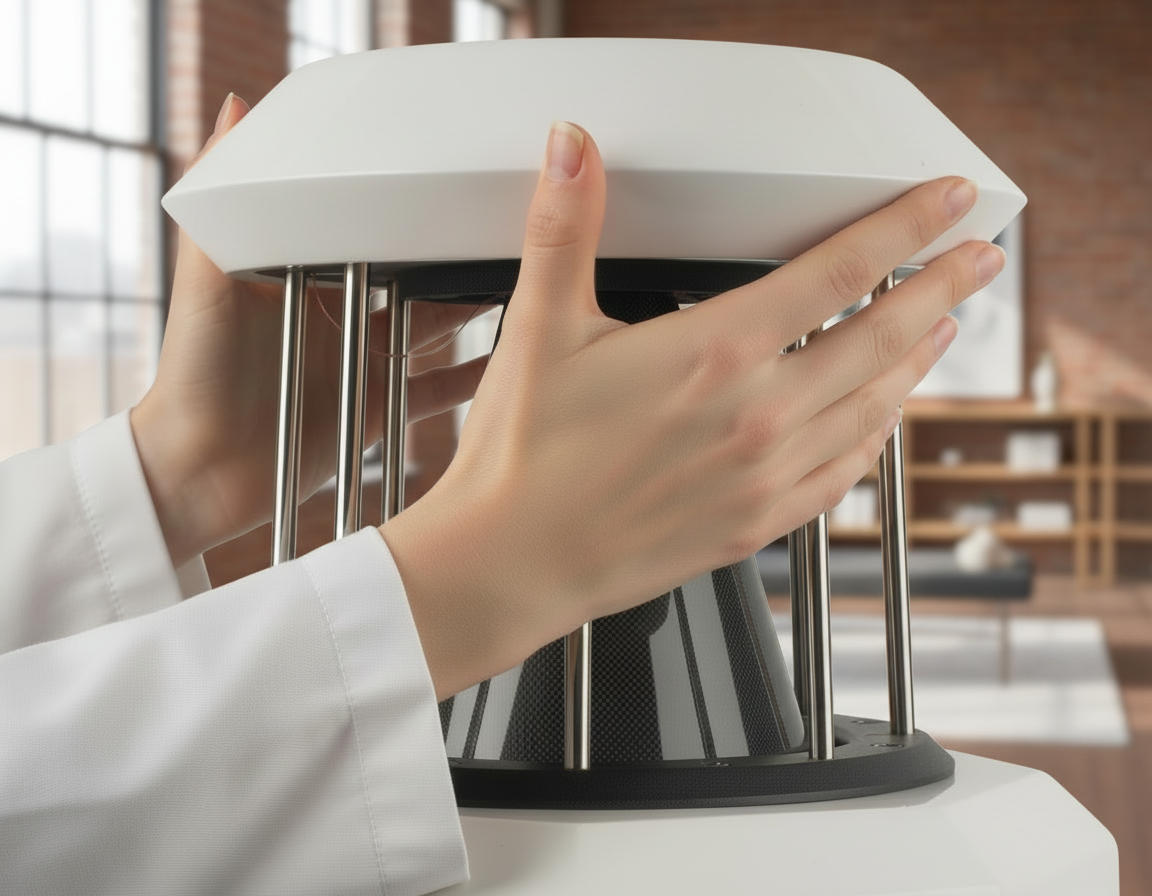
Easy to set-up and use
The DDD driver’s omnidirectional radiation pattern and wide frequency range make the PQS-402 less critical of its position in the room than conventional loudspeakers, so they are comparatively quick and easy to set up. Another advantage of being omnidirectional is that no toe-in adjustment is required, which further simplifies the set-up procedure.
The angled front faces of the bass cabinets allow the PQS-402 to be set relatively close to the rear wall.
Separate inputs are provided for the woofer and DDD driver crossover inputs, allowing single or bi-wire connection.
Jumpers on the loudspeaker’s rear panel allow the high frequency output level to be adjusted in 4 steps: -2dB, flat, +2dB and +4dB, enabling the user to easily compensate for the variations in the absorption of high frequencies that can occur due to different types of furnishings and room construction.
A second set of jumpers allow the low frequency to be adjusted in 3 steps: +10dB, +5db and flat centred at 65Hz

Award-winning
Discover what leading voices in the hi-fi industry are saying about the PQS-402 from Germany Physiks. These respected professional reviews dive into its performance, design, and true high-end credentials. Click the Read Reviews button to explore the reviews and see why this speaker is earning serious acclaim.
Finish options
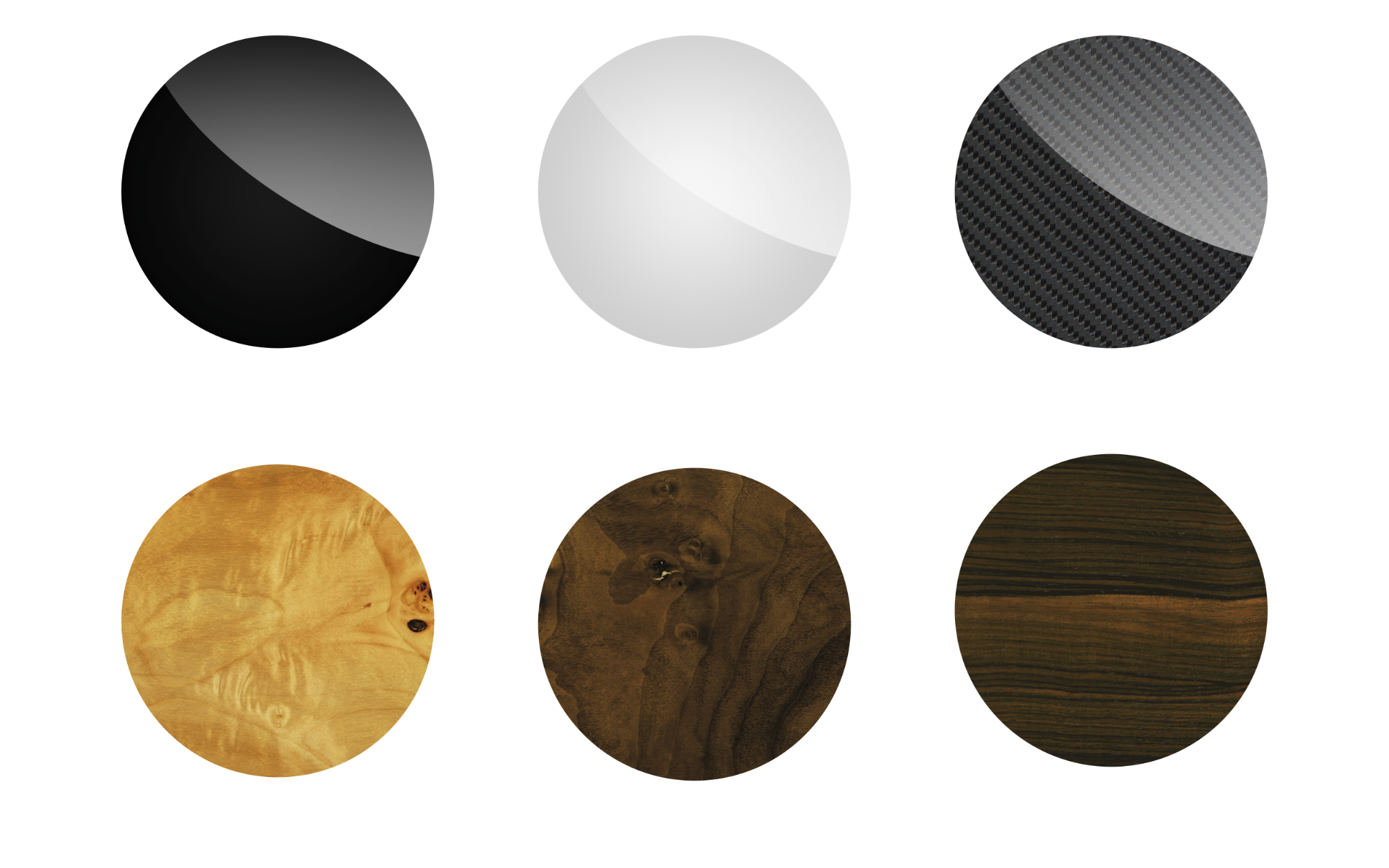
To achieve a luxurious look that matches their outstanding sound quality, all our loudspeaker cabinets are hand-built and finished in Germany by skilled cabinet makers.
The standard finishes for the HRS-130 are high-polish polyester in black or white, carbon fibre and macassar, walnut cluster and pappel cluster high-polish veneers.
Other high-polish veneers and high polish polyester in custom colours are available to special order. Please consult your dealer for price and availability.
Impedance: 4 ohms
Frequency response: 24 – 24,000Hz
Power handling: Nominal 450W / Short term 750W
Amplification required
Passive operation: 1 power amplifier per channel
Minimum 200W/4 ohms 2 power amplifiers per channel
DDD section: minimum 140W/4ohms
Sub-woofer section: minimum 200W/4ohms
With active crossover: 2 power amplifiers per channel
DDD section: minimum 125W/4ohms
Woofer section: minimum 180W/4 ohms
Crossover frequency: 215Hz
Crossover slope (Passive version): DDD section 12dB/octave electronic & 18dB/octave acoustic / Woofer section 18dB/octave electronic & 24dB/octave acoustic
Passive crossover adjustment: -2dB, flat, +2dB and +4dB centred at 8,000Hz / +10dB, +5db and Flat centred at 65Hz
Sensitivity: 88.4 dB for 1W at 1m
Maximum output level: 118dB
Operating principle: 2-way loudspeaker with 360° surround radiation using the German Physiks DDD driver
Input connectors: 2 sets of WBT nextgen™ binding posts
Drivers: 2 x carbon fibre DDD drivers / 2 x 10-inch woofers / 4 x 8-inch passive radiators
Recommended room size: 30 - 150 square metres / 317 – 1,584 square feet
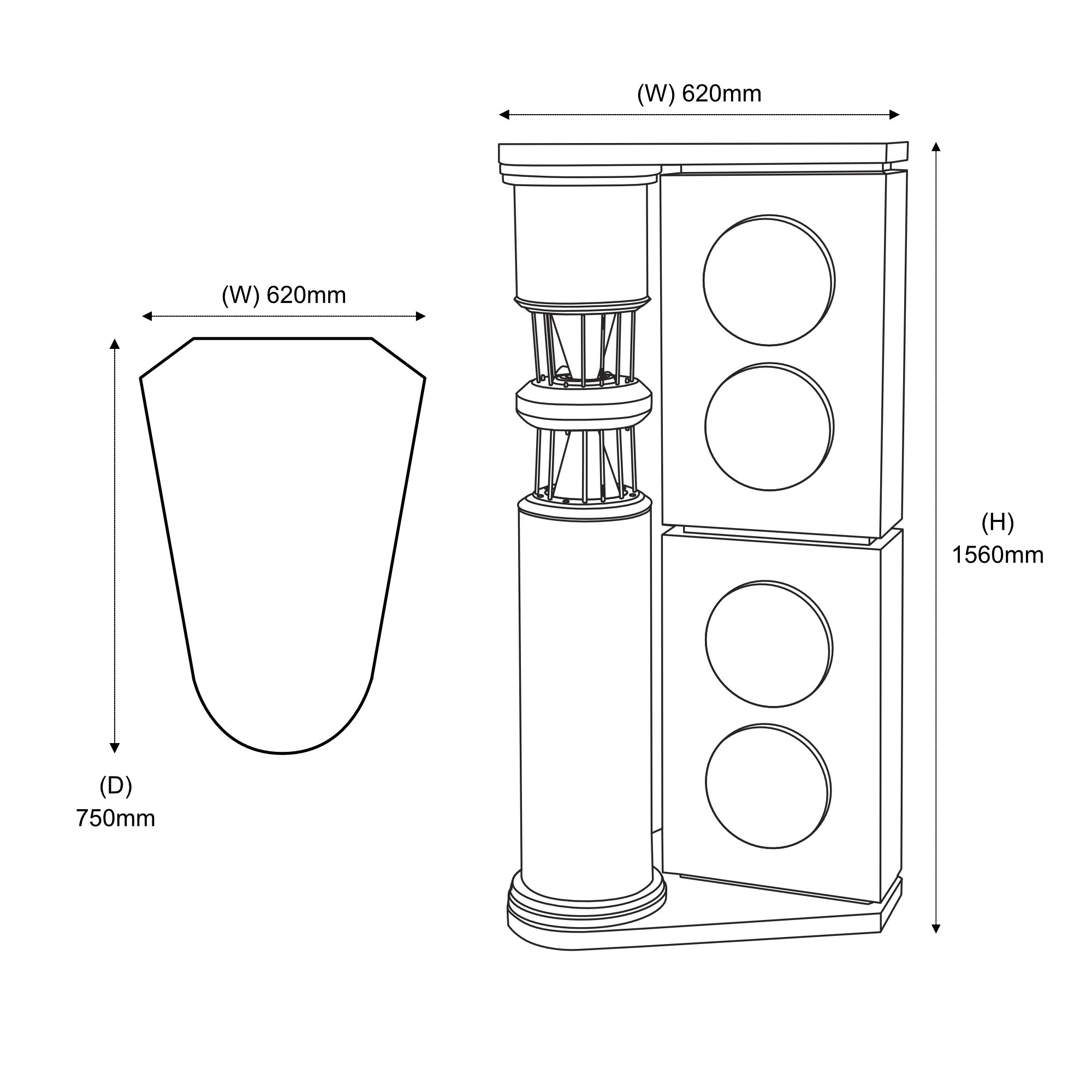
Dimensions: 620mm W x 1,560mm H x 750mm D (24.4" W x 61.4" H x 29.5" D)
Weight: 165kg / 363lbs
Warranty: 5 years
As part of our process of continually improving our products, we reserve the right to change specifications without notice
German Physiks DDD Loudspeakers Models
-
![Line drawing of a tall, rectangular scientific instrument with a wider top and a base with four sides, featuring a small label at the bottom.]()
The HRS-130
LOUDSPEAKER
-
![Line drawing of a tall, hexagonal structure with a distinctive top, labeled 'German Physics' at the bottom.]()
The Borderland Mk IV
LOUDSPEAKER
-
![Black and white illustration of a tall, hexagonal physics laboratory apparatus, labeled "GERMAN PHYSICS" at the base.]()
The Carbon Mk IV
LOUDSPEAKER
-
![Line drawing of a 3D printer with a spool of filament on the side.]()
The PQS-302
LOUDSPEAKER
-
![Line drawing of a rocket next to a tall cabinet with three large circular doors.]()
The PQS-402
LOUDSPEAKER
-
![Line drawing of a vintage street lamp with a curved base, decorative pillars, and multiple lantern-style lights on a black background.]()
The Loreley Mk III
LOUDSPEAKER
-
![Line drawing of a large speaker system connected to a cylindrical device with a lens, mounted on a black background.]()
The Emperor Mk II
LOUDSPEAKER
-
![Line drawing of a black and white high-voltage electrical tower and a stack of three washing machines.]()
The Gaudi Mk III
LOUDSPEAKER