German Physiks Newsletter No. 19 $$PLAIN_TEXT_PREVIEW$$

December 2020 | Newsletter No. 19

Two tube systems that shouldn’t work …
and more

This year has been one that most of us would probably prefer to forget. Hopefully 2021 will be a much better year for everyone. In the meantime, to provide a couple of minutes diversion while you put your feet up and try to digest the Christmas turkey, here is our December 2020 newsletter.

We have two items for you this month:

  • Two tube systems that shouldn’t work

  • Pion power cable receives HiFi+ Highly Commended award

Two tube systems that shouldn’t work …

On a recent photoshoot organised by one of our UK dealers, VAL HiFi, we had the opportunity to try our HRS-130 loudspeakers with two comparatively low powered tube amplifier systems. As the recommended minimum power rating for amplifiers to be used with the HRS-130 is 70W into 4 ohms, we expected that both of these systems would sound anaemic and underpowered. Much to our surprise, we were wrong.

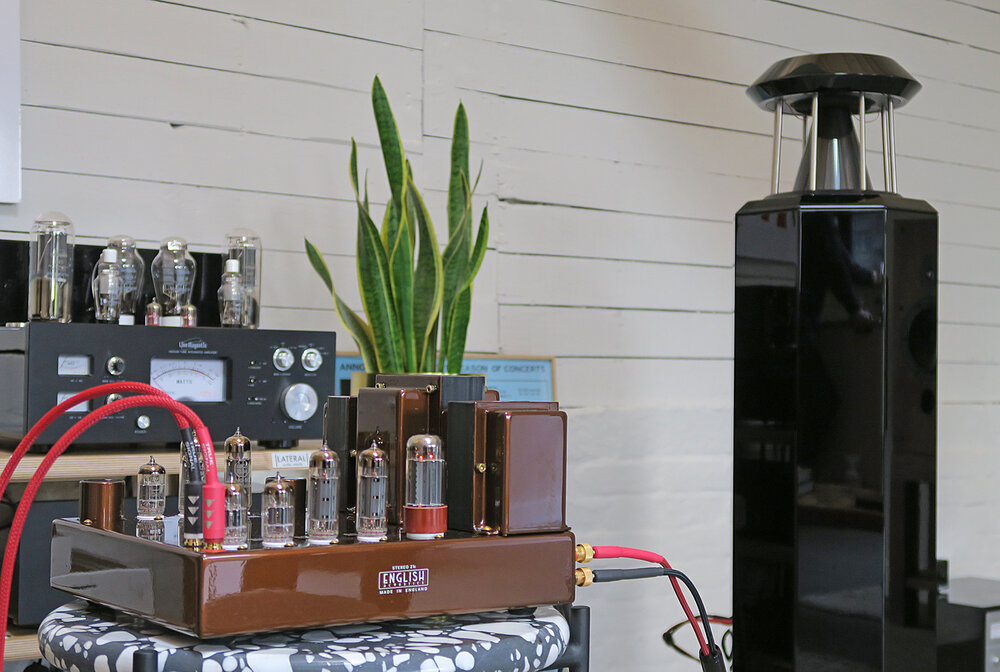
The first amplifier we tried was from a relatively new British company called English Acoustics. We used their Stereo 21c, an updated and improved recreation of a Leak Stereo 20.

The Stereo 21c uses two EL84 tubes in an ultra-linear configuration to produce 20W per channel. The EL84 was developed by Philips and introduced in 1953. It was used in a number of British hi-fi designs, including the 5-10, a DIY design produced by the British tube maker Mullard. It was also used in the iconic Vox AC30 guitar amplifier. Introduced in 1959, this quickly became popular with a host of British groups including the Beatles, The Shadows and the Rolling Stones. Brian May of Queen is also a long time user of the AC30.

However we digress. Once we had the Stereo 21c connected up and running, and contrary to our expectations, we found that it was able to do a pretty good job of driving the HRS-130s. The combination was very musical and enjoyable. For a small to medium size rooms and provided you are not a fan of death metal, or want to play Mahler at ear shattering levels, this is a very good sounding combination. It was especially enjoyable with solo vocal and jazz music.

The original Leak Stereo 20 was produced by the British maker H. J. Leak & Co Ltd. The company was founded in 1934 in London by Harald Joseph Leak. It was at its peak during the 1950s and 1960s, producing a range of high quality amplifiers, tuners, loudspeakers, cartridges, arms and even a turntable. Harald Leak was an exceptionally clever and innovative engineer and his products were regarded with equal respect in the UK and many other markets, as their possibly better known competitor, Quad.

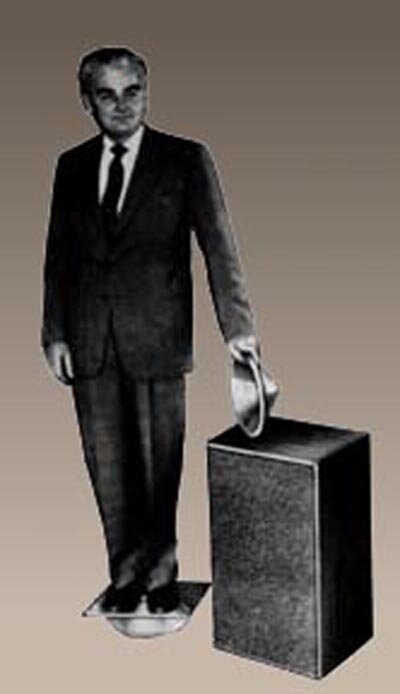
An example of Leak’s innovation was the Leak Sandwich loudspeaker. This used a cone formed from a core of expanded polystyrene sandwiched between two layers of aluminium foil. This created a very light and extremely strong structure. So strong in fact, that advertisements for the Leak Sandwich loudspeaker featured a picture of Harald Leak standing on a sheet of glass, balanced on top of a Leak Sandwich driver cone. We managed to find this rather poor quality image of one of these adverts.

In 1969 the company was sold to the Rank Organisation and in the late 1970s, in the face of stiff completion from overseas, the company ceased trading.

In an interesting twist to the Leak story, we have found that the brand has recently been bought by the IAG Group and they manufacturing products under the Leak brand. You can find out more about these on their web site here.

Visit the HRS-130 web page

The other tube system that shouldn’t have worked

The other interesting amplifier we had the opportunity to try with the HRS-130s at VAL HiFi’s photoshoot was a Line Magnetic LM-845 Premium. Instead of the two EL84 tubes in a push-pulll output stage operated in ultra-linear mode employed by the English Acoustic’s Stereo 21c, this uses a single 845 triode. The 845 was introduced in 1931 by RCA in the U.S.A. It was intended for use as a radio transmitter tube, but has been widely used in audio designs over the years. The original design featured an anode made from machined graphite, which allowed a high dissipation - up to 100W. Many current production 845s use a metal anode structure.

In the LM-845 Premium, the 845 delivers 30W per channel and while still well below the 70W recommended as the minimum amplifier rating to drive the HRS-130, this still managed to produce a very musical and well balanced sound, with good bass. Dynamics were very good, though not surprisingly, not on the same scale as you would get using a large solid-state amplifier. It was particularly good with small classical and jazz ensembles and female vocals. It just goes to show, you have to try these combinations out to see if they will work for you or not.

We would be interested to hear from anyone using our loudspeakers with tube amplification.

Visit the HRS-130 web page

Pion power cable wins HiFi+ Highly Commended award

About 12 years ago we manufactured a power cable under the Pion brand. This was designed for us by a specialist in cable designer and at the time it was quite successful. We also manufactured two mains conditioners under this brand. Our loudspeaker sales then began to take off faster than we expected and as we did not have the resources to promote both brands, the Pion project was put on hold.

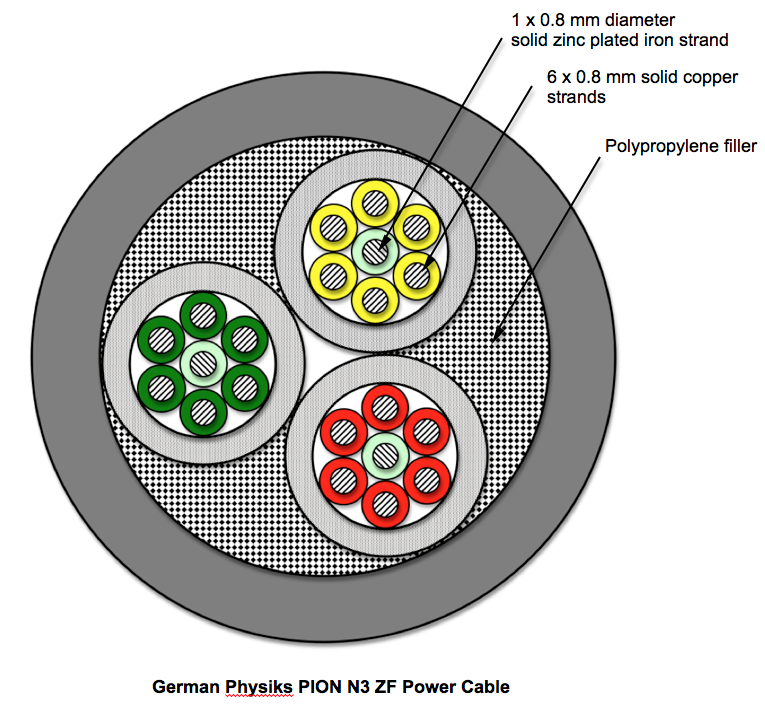
Last year, at the request of one of our major customers, we went back to our cable designer and he came up with a new and unique design. Each conductor in the new Pion power cable consists of a single insulated solid iron strand, surrounded by six individually insulated solid copper strands. The iron strand acts like the core in an inductor, giving the cable a higher impedance at high frequencies, thereby offering a degree of high frequency noise filtering.

Earlier in the year, Alan Sircom, the editor of the UK magazine HiFi+ gave the Pion power cable a glowing review where he commented:

“This is a power cable for power users; hefty power amps in particular show just what this cable is capable of and while that applies across the board, its sense of dynamic flow and absence of dynamic obstruction really come across when using something power-hungry in and of itself. This is not simply edge-of-the-seat dynamics, but the more subtle shading and interplay between fingers and instrument that are often lost in a sea of high-frequency hash.”

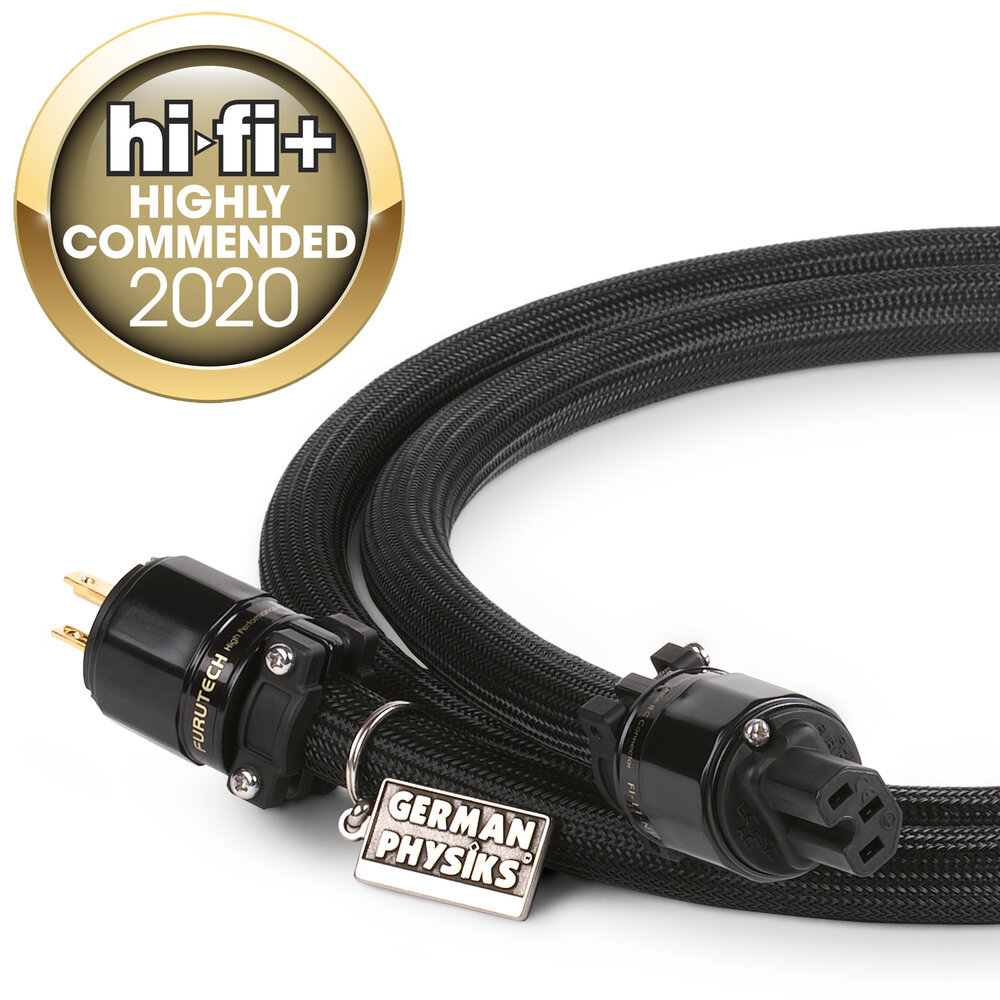
This month, HiFi+ honoured us with a Highly Commended award for the Pion power cable. Our thanks to all at HiFi+.

If you get the opportunity, please try one of these cables in your system. It is most definitely not just another hifi cable.

Visit the Pion N3-ZF web page

Read Alan Sircom’s review here

Visit the HiFi+ web site

In the pipeline

  • A review of the Borderland Mk IV loudspeakers.

  • A major US award for the HRS-130 loudspeakers.

  • A major US award for the Borderland loudspeakers.

  • Print and video reviews of the Emperor integrated amplifiers

  • A video review of the HRS-130 loudspeakers.

Until next time…

Thank you again for signing up to our newsletter and thank you for your continued interest in our products. Please don’t forget to visit our Facebook and Instagram pages.

If we can be of help with anything at all, please do not hesitate to get in touch with us here. You can find your national distributor here.

Holger Mueller | German Physiks

twitter facebook instagram

DDD-MANUFACTUR GMBH, GUTENBERGSTRASSE 4, 63477, MAINTAL, Germany

Unsubscribe