February 2020 | Newsletter No. 10

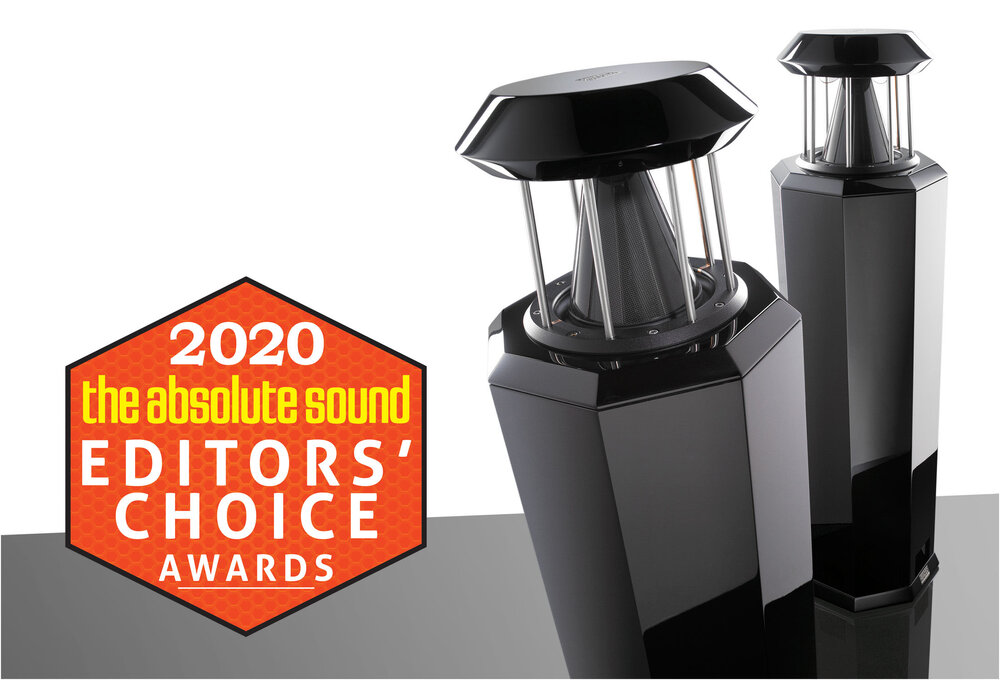
HRS-130 Loudspeakers win The Absolute Sound Editors’ Choice Award

Welcome to our February newsletter. Our thanks to our long term readers and a warm welcome to new subscribers.

The big news in this issue is our HRS-130 loudspeaker receiving its second Editors’ Choice award from The Absolute Sound.

Our HRS-130 loudspeaker has just received its second Editors’ Choice award from the top US audio magazine The Absolute Sound. That makes a total of three awards that the HRS-130 has received from this magazine: we must be doing something right.

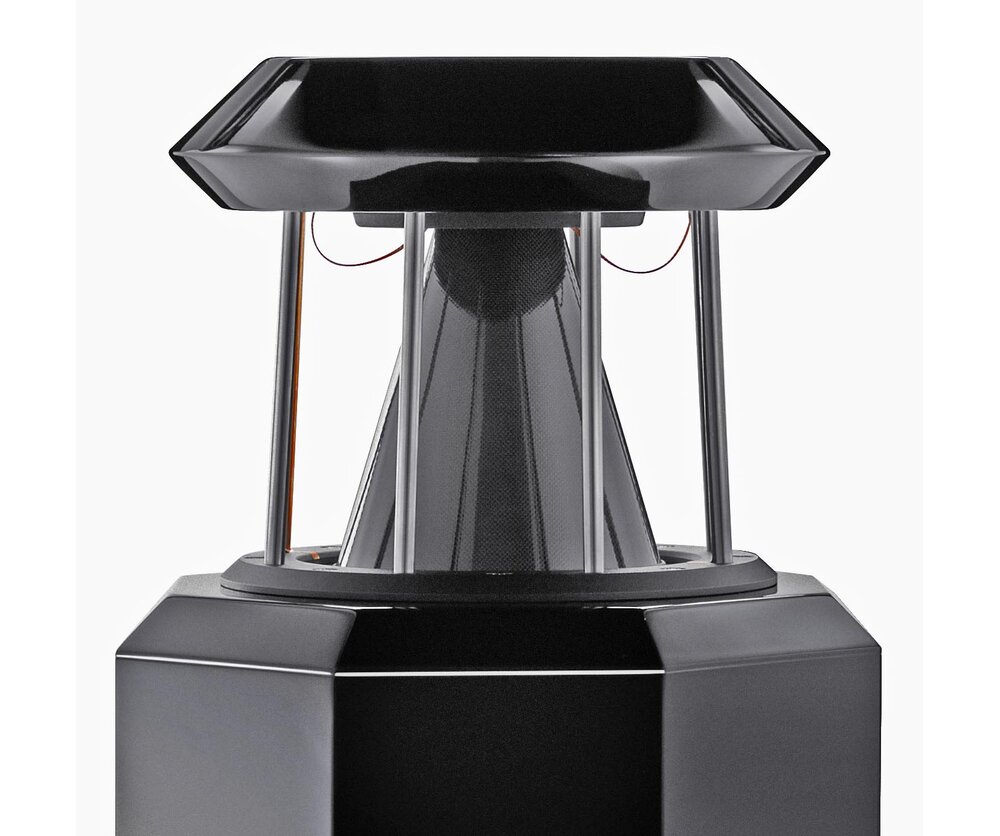
Dick Olsher, the reviewer who nominated the HRS-130 for the award, has designed several loudspeakers himself and consequently probably knows more than most reviewers about what makes a good loudspeaker. He is especially an admirer of our DDD driver, as he appreciates the advantages its wide-bandwidth has over conventional drivers.

Dick’s original review of the HRS-130 is full of great quotes. Here are just a few.

On the advantages of a wide-bandwidth driver:

“Slicing and dicing the music for consumption by several drivers has a major consequence, namely the loss of coherence since most instruments are reproduced by multiple sources of sound on a baffle. By contrast, the DDD sings with one voice—just like the real thing. The driver is literally positioned outside of a box, which allows for its 360-degree radiation pattern and is responsible for its outside-of-a-box spaciousness.”

On the DDD driver’s excellent dynamic capabilities:

“Microdynamics popped right out of the fabric of the music, making it a breeze to connect with the music’s emotions and drama.”

“Transients benefited from the DDD’s coherence and phase fidelity, both the attack and decay portions being exceptionally well controlled.”

His concluding comments:

“What you get here is a world-class wide-range driver that is exceptionally well engineered and superbly integrated into a speaker that is almost perfect for a small-to-medium-sized room. In my estimation, the carbon-fiber DDD is one of the top five driver innovations of the past 40 years, delivering the coherent phase and uniform power response first envisioned by Lincoln Walsh. Given the right amplifier and room setup, the HRS-130 ticks all the important sonic boxes and clearly edges out the competition when it comes to palpable imaging. No wonder the German Physiks HRS-130 is currently my favorite speaker under $25k."

Our thanks to Dick Olsher and to Robert Harley, editor of The Absolute Sound, for their support.

Read Dick Olsher’s review of the HRS-130

Visit the HRS-130 web page

Dick also wrote a rather nice review of our Unlimited loudspeaker, the model below the HRS-130 and you can read this here. 

Visit the Unlimited web page

Visit The Absolute Sound web site: www.theabsolutesound.com

Some HRS-130 Facts

#1: Wide bandwidth DDD driver

The HRS-130 uses a single carbon fibre DDD driver and 10-inch woofer. The DDD driver covers the range 220Hz to 24,000Hz. Because almost everything you hear is radiated by one compact driver, the HRS-130 has exceptional coherence. This is impossible to achieve in designs where this range is covered by two, or even three different types of driver which are located in physically different positions on the cabinet. Dick Olsher alluded to this in the quote above from his review about, “slicing and dicing

#2: Low resonance cabinet design

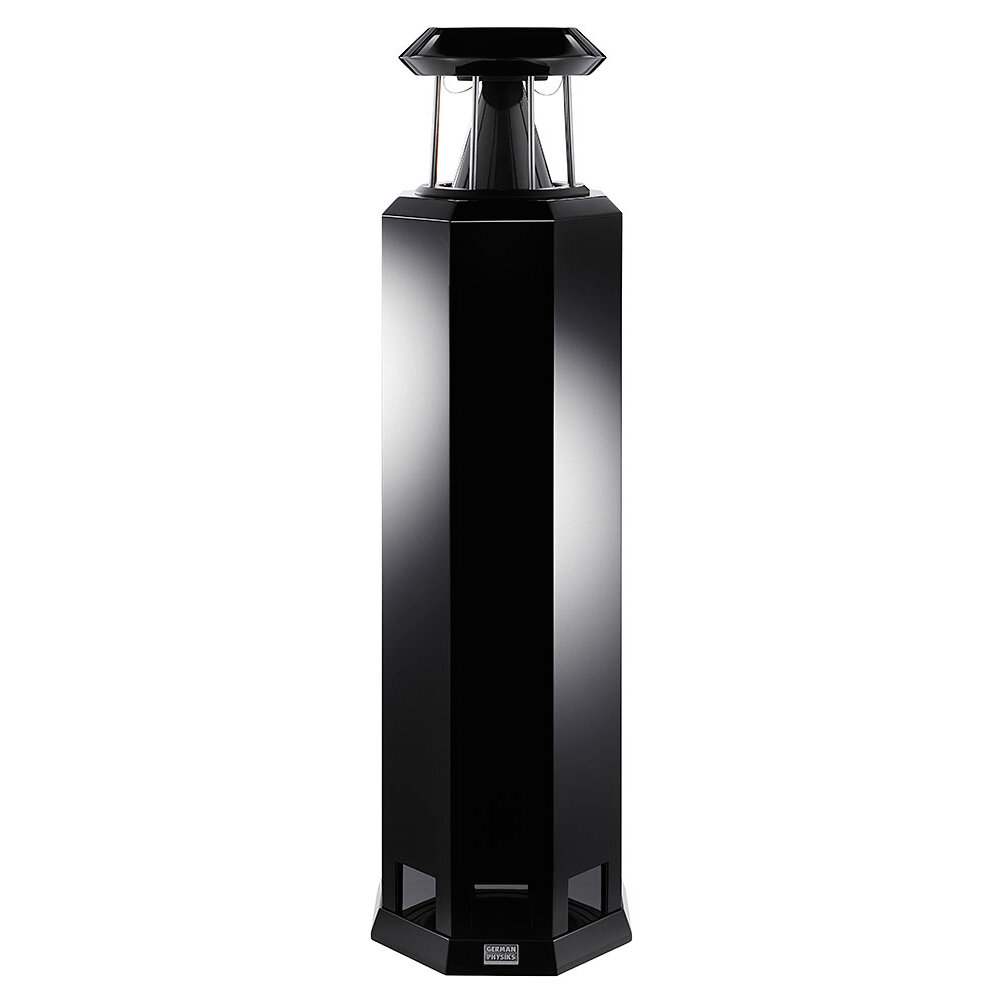
The HRS-130 uses an octagonal section cabinet. This means that the individual cabinet panels are much smaller and therefore much stiffer than those of an equivalent volume square section cabinet. This greatly reduces cabinet resonances and improves transparency. This does add significantly to the cost of the cabinet, but we believe that this is justified by improvement in performance.

#3: Ultra efficient damping material

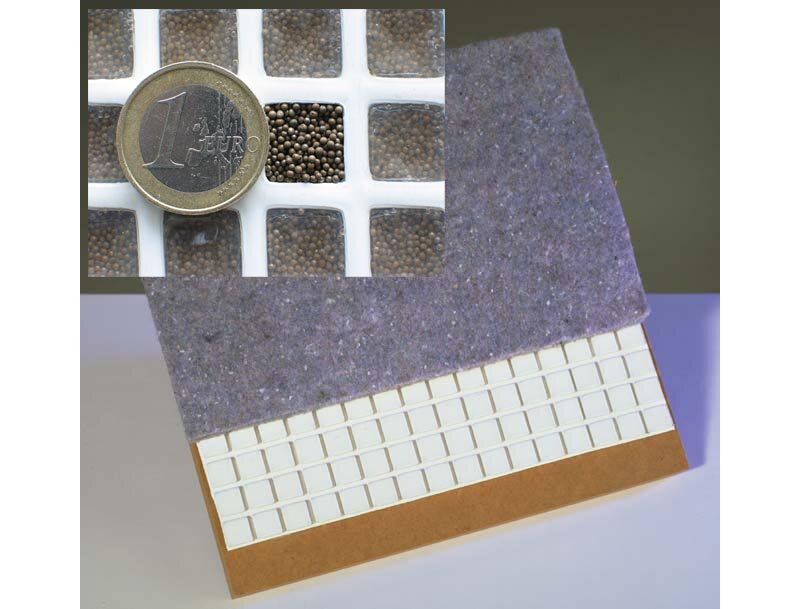
To minimise any residual tendency of the cabinet to vibrate, the inside surfaces are lined with a material called Hawaphon®. Originally developed for the security industry, this consists of a matrix of small cells filled with steel shot. These very efficiently convert vibrational energy into heat and can give up to 50dB of vibration reduction. Consequently, the HRS-130 cabinet is very inert. You will hear this if you tap the cabinet.

#4: Downward firing woofer

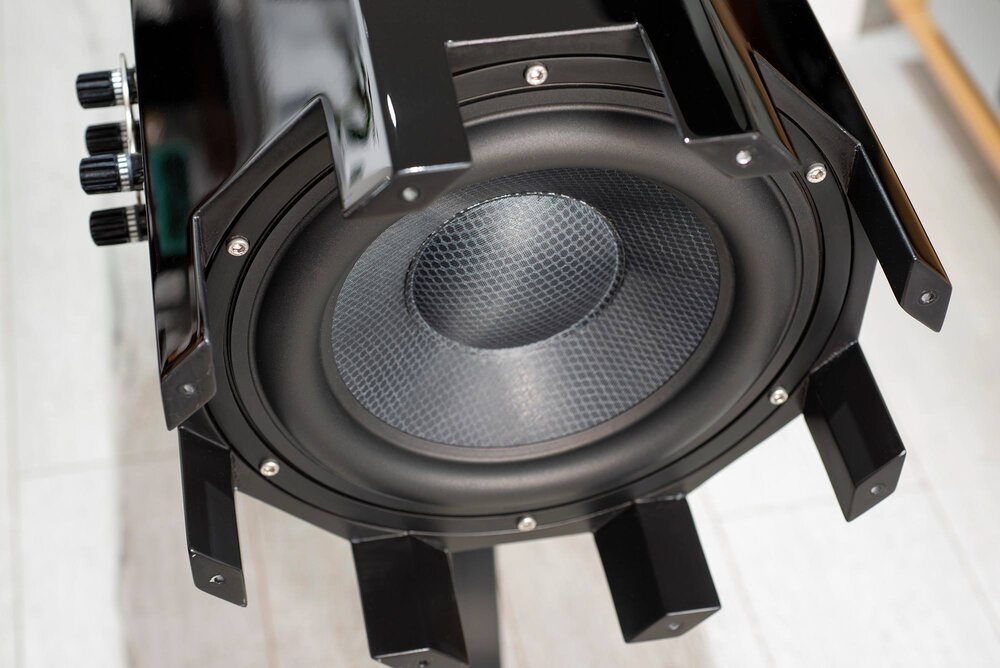
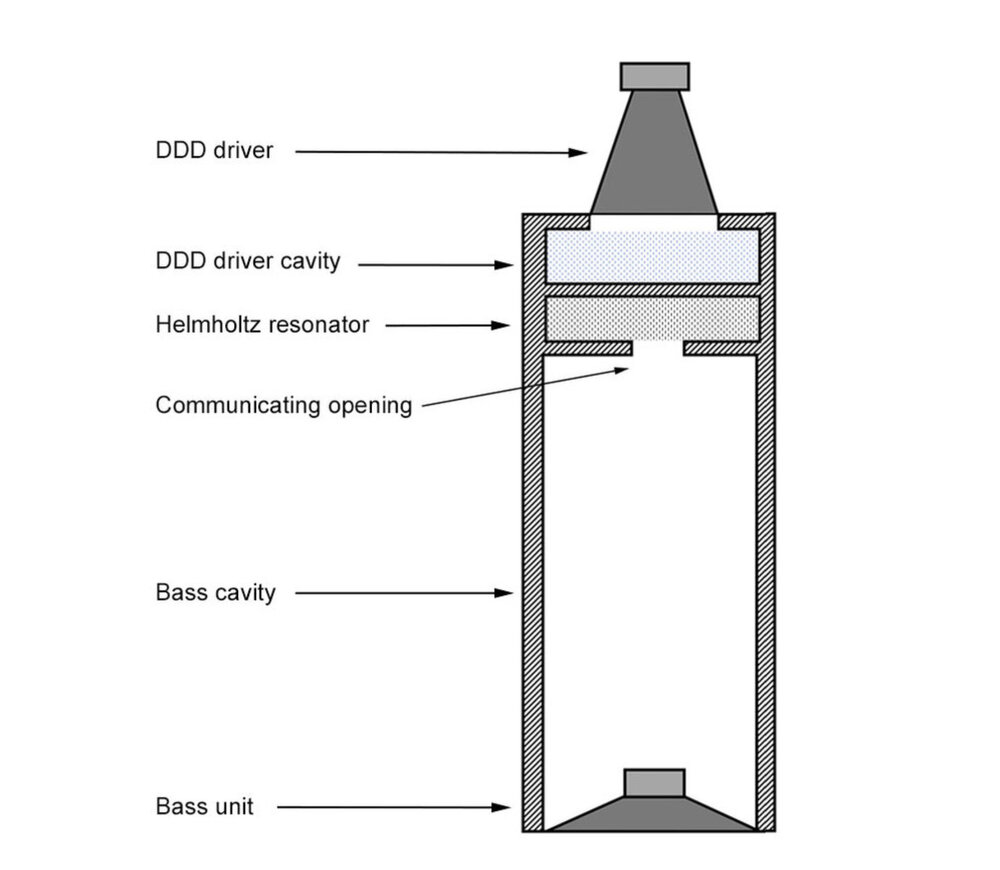
A 10-inch downward facing woofer covers the range from 220Hz to 29Hz. This works in a sealed cabinet as shown in the diagram below. Because the HRS-130’s woofer works over a comparatively small frequency range, it has a very good transient response. This provides good integration with the frequency range covered by the DDD driver and avoids the discontinuity between the ranges that would occur with a slower woofer.

To prevent a hump in the bass response caused by the resonance of the bass enclosure, there is an additional enclosure at the top of the cabinet and the two are linked by a small opening. The upper enclosure is filled with damping material and tuned to the main enclosure resonant frequency, thereby suppressing the main enclosure resonance and providing a smooth bass response.

This technique is also used in the Borderland Mk IV.

#4: Biwirable and adjustable

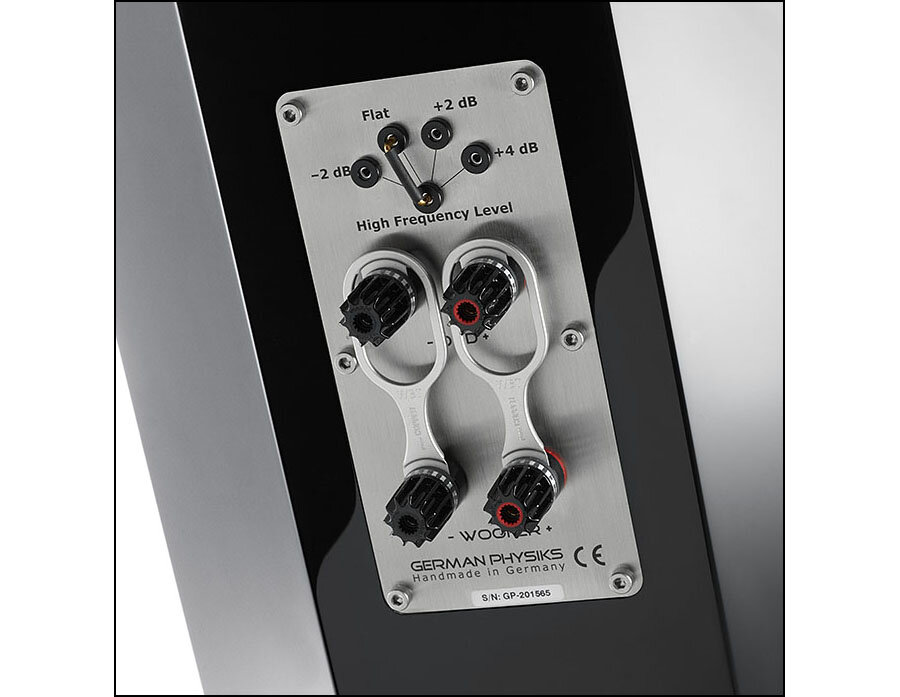
Separate inputs for the woofer and DDD driver sections of the crossover allow the HRS-130 to be bi-wired or bi-amped. Both techniques can provide a useful improvement in performance and allow the user to upgrade their system.

A high frequency level control on the rear panel allows the response to be adjusted in four steps centred at 8,000Hz. This can be useful to correct a balance that is either slightly too bright, or slightly rolled off.

Until next time…

Thank you again for signing up to our newsletter and thank you for your continued interest in our products. Please don’t forget to visit our Facebook page.

If we can be of help with anything at all, please do not hesitate to get in touch with us here. You can find your national distributor here.

Holger Mueller | German Physiks