|
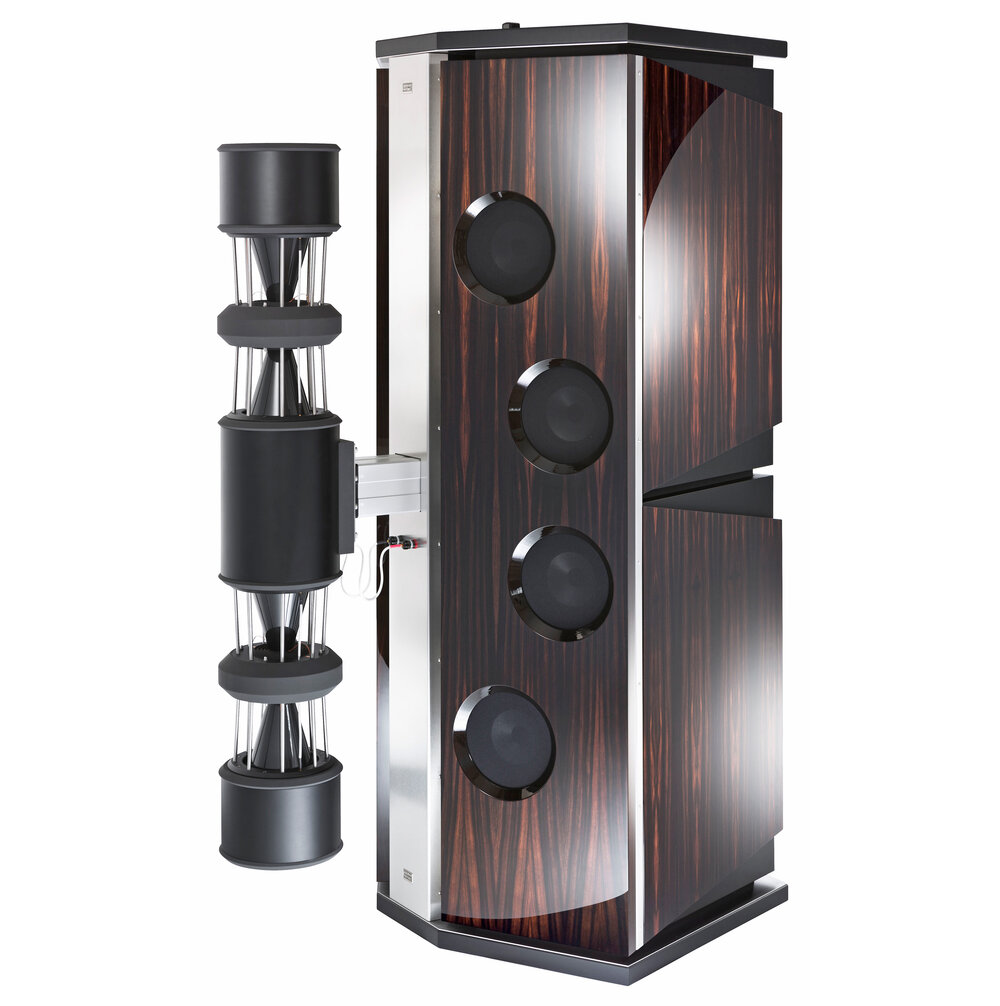
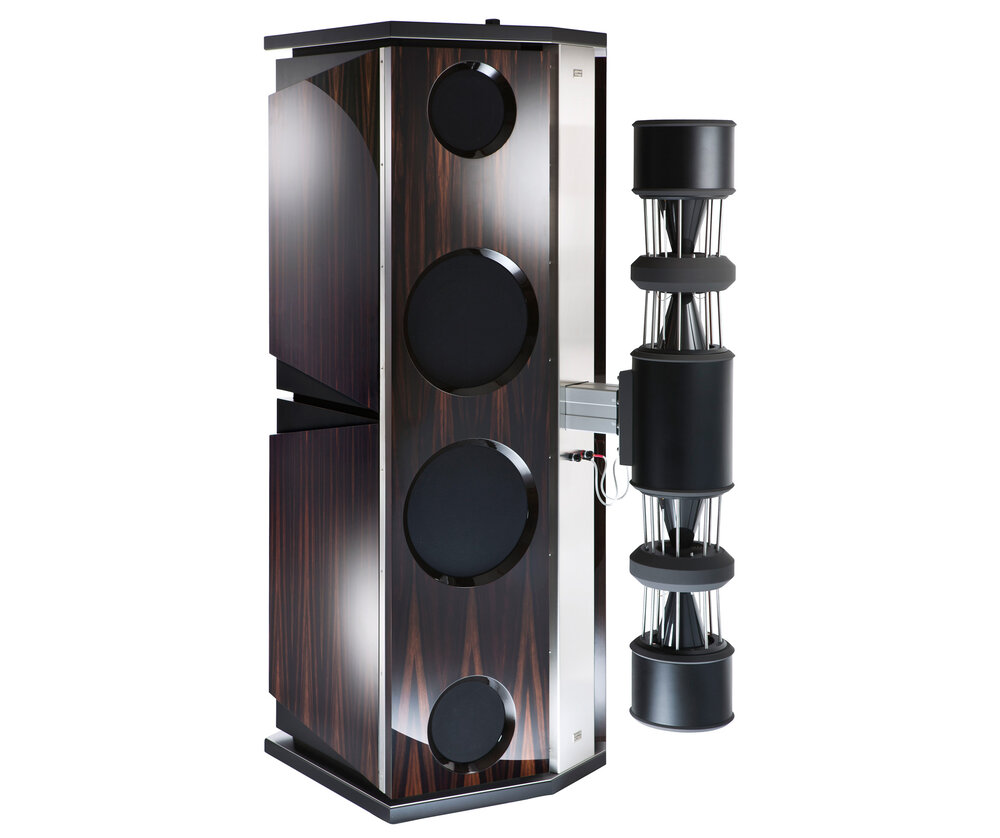
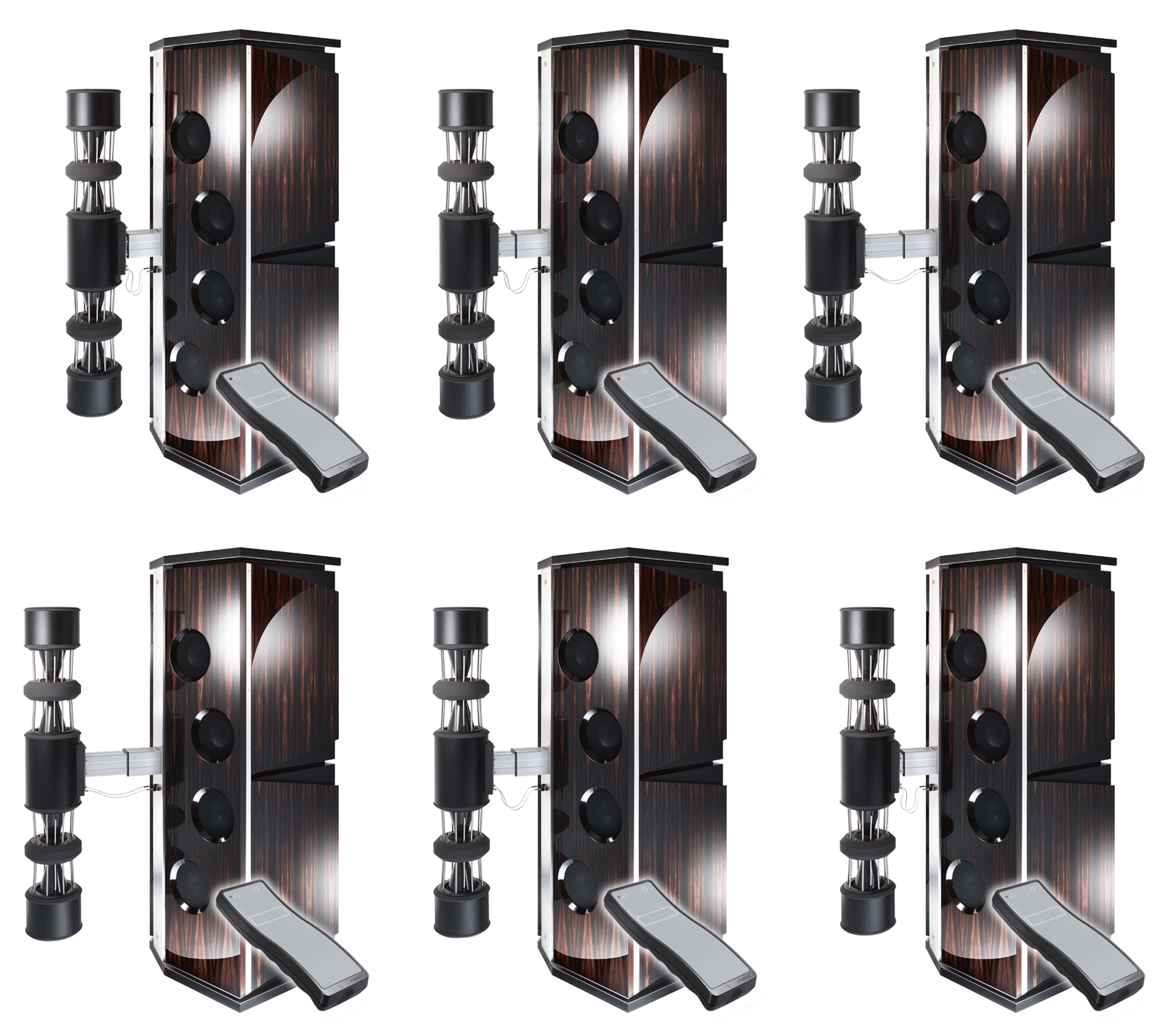
Finally, the cables to the DDD driver array are attached and power connected to the back of the loudspeaker. All being well, when the remote control is pointed at the loudspeaker and the appropriate buttons are pressed, the DDD driver array will move back and forth, as shown in the picture above. While this may look rather bizarre, it is far from a gimmick. The DDD driver array covers the range from 180Hz to 24,000Hz: almost the entire range of the loudspeaker. Moving the DDD drivers is effectively the equivalent of moving the entire loudspeaker and this allows you to make fine adjustments to the position of each loudspeaker from the comfort of the listening seat. This is much easier and quicker than having to physically move the entire loudspeaker and you can compare different settings very easily. Each DDD driver in the array covers the same frequency range. Four DDD drivers are used in order to provide the required maximum output level, which for the Emperor Mk II is 118dB. This is significantly louder than most conventional loudspeakers and provides very realistic, live-music-like dynamics. The remote control doesn’t use a conventional battery. Instead, every time the remote is moved, a generator inside it charges a special kind of capacitor. This ensures that you should never be faced with a remote control with a flat battery. The Emperor has to be tri-amped, so it requires 6 channels of power amplification. These are driven by the electronic crossover that is supplied with the loudspeaker. For future Emperor deliveries, this will be our Emperor DSP-X crossover. This is supplied pre-programmed with the standard Emperor crossover filters. The customer can modify the crossover’s overall characteristics using an ap that runs on Windows, OSX and iOS devices. This allows the user to set up to 8 filters, where they have the choice of the filter type (bell, shelf, notch, or all-pass), centre or turnover frequency, Q or bandwidth and gain. 100 user memories are available for the user to store their custom settings. For more information please visit the links below. Visit the Emperor Mk II web page. Visit the Emperor DSP-X crossover web page.
|